CDVII – Afterthought About Belief

There’s a better way to approach the idea I was getting at in my couplet of posts about Belief. It turns out I have approached this topic before previously when talking about opinions.

In the article on opinions, I classify opinions as things we believe in our hearts but not our minds–this is why we use “Hey man, that’s just my opinion!” when we are pressed about them. They are things we think subjectively. “The way it looks to me” is the way you introduce an opinion.

Rationalizations are things we believe in our minds but not our hearts. They are “reasons”. Why did little Jimmy throw the ball in the house, despite repeated warnings not to? He thought it would be OK to throw it just one more time. That is a rationalization. It is something that is good enough to convince yourself but it doesn’t stand scrutiny.

For lack of a better word, Dogmas are beliefs which we find true in both our hearts and our minds. We cannot be shaken of Dogmas because of this deep connection of our interior self. Dogma’s are especially unshakeable when they are objectively true as well.

So in my original article, the repeated phrase “Live and let live, right? That’s none of my business” is a rationalization–it’s good enough to convince us but doesn’t withstand strict scrutiny. Tom D, in his comment which I republished recently, said that he wouldn’t necessarily impose his beliefs on others. Here he is suggesting his political beliefs are opinions–they are just the way things look to him.

When it comes to anything governing our lives, we behave according to Dogmas. We can be influenced by Opinions, we can fool ourselves with rationalizations, but our default, reflexive behavior is in accordance with Dogmas. If we believe financial prudence is a dogma, our default behavior will be financially prudent. We take these things as a given, because they are both subjectively true–true from our perspective; and objectively true–an accurate description of reality.

Opinions are not objectively true because we know them to be a statement from the heart and not an observation about reality. If I think fish tastes bad, this does not mean that all fish must taste bad for everyone, it means that I will likely not eat fish. Rationalizations are not objectively true because we know them to be convenient truths to help us accomplish something. If I think eating a cookie is OK just this once, because I earned it today, then I am likely to eat more than just one cookie because I am rationalizing to myself to convince myself that eating a cookie is OK. We know when we are rationalizing.

Only those things which we hold as Dogmas are things we can describe as objectively true. Because they are objectively true, they must be universally true as well. Flat Earthers are not just helping themselves to a subjective belief, they are factually wrong about reality. If we hold political beliefs, but only give them the weight of opinions, what good are they? We don’t believe they are valuable enough to apply on a wide social scale, so they aren’t really useful as a political belief. Political beliefs take on the character of Dogmas because political disagreements are disagreements about what is good, and things that are good are also things that are true.

In very short: We only believe with firm, dogmatic belief, those things which we find to be true. If they are true, they are universally true, and not just locally true.

QED?

AMDG
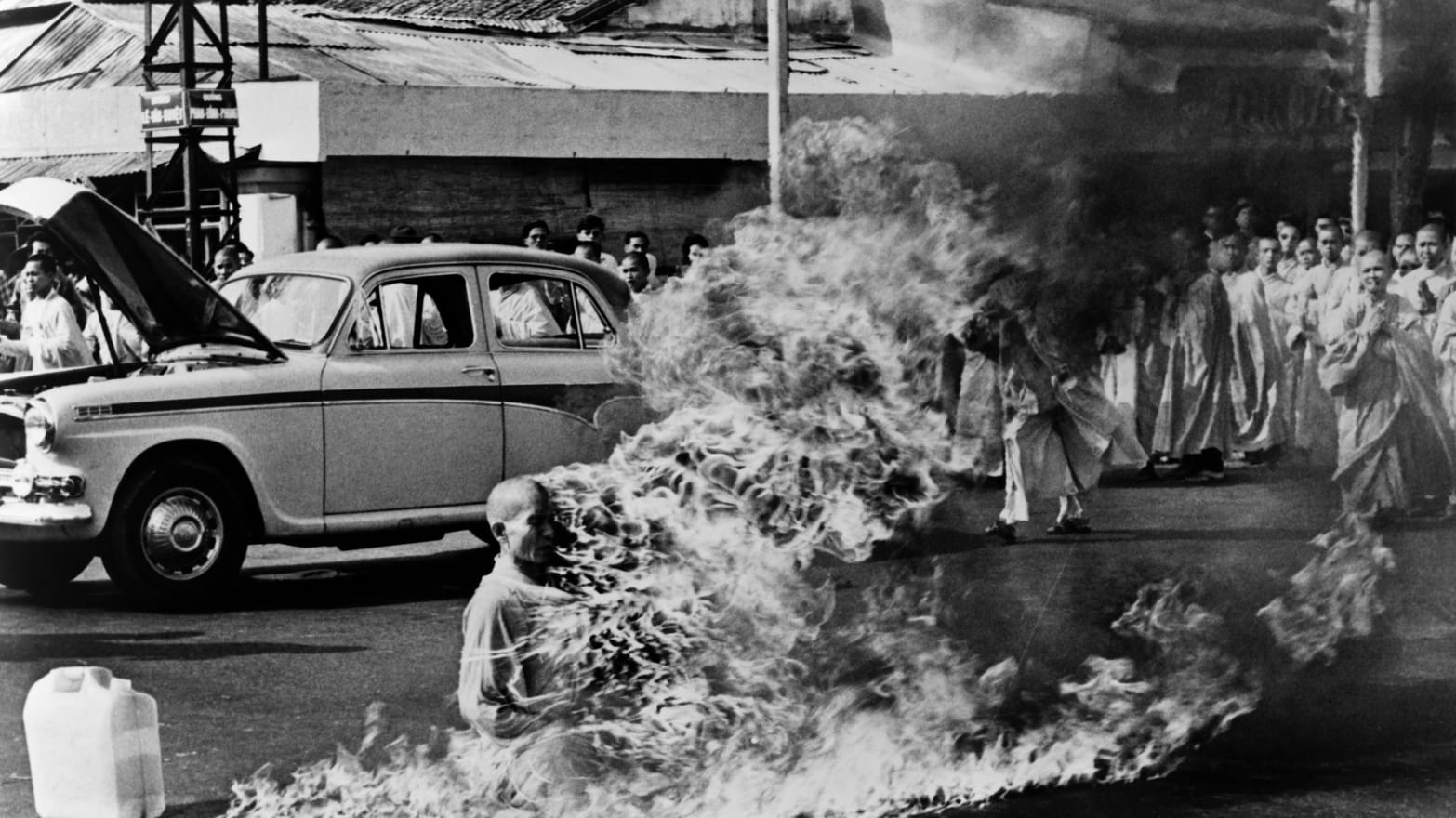
CXVIII – Burn

From JMSmith in a comment:

Faith formation should obviously be of the second sort. It should not be just a haircut. As one of our hymns puts it, we acquire a “new heart.” And heart here means soul. The new heart we acquire is not just one replacement part in our system, but a new control that transforms every part in the system. If we liken ourself to that block of wood, we are not being carved. We are being burned.


Some people, especially in popular media and academia, like to refer obliquely to religion by discussing “Transcendence”. Transcendence is this idea of “moving beyond” or “rising above”. The phrase I commonly see is “Belief in the transcendent” to refer ambiguously to all religions. What they mean by this is “Belief in things beyond ourselves”. Occasionally there is condescension or even derision in this phrase, as if belief in things we cannot see is foolish and naive.

Lowercase r-religion is a healthy part of human existence. I refer to what I like to call “Scoots Hierarchy of Faith”: I would much rather you have any faith than no faith; I would much rather your faith be Christian than non Christian; I would much rather your kind of Christianity be Catholic than non-Catholic. In evidence, in one job of mine, we were divided into “teams” and I shared an office with my teammate, and two offices of teams made a department, under one manager. My teammate was a devoutly muslim woman. Our manager was irreligious. One office interloper was more of the humanist sort though not as aggressively atheist as many atheists are today. Because of this “belief in the transcendent” I was able to relate more to my muslim teammate, and share common values insofar as we believed in some kind of value system which is external to our own cognition. Our irreligious manager was a petty and cruel person. Our office interloper cannot be said to have any moral misgivings at all other than a quixotic and very internal sense of “what is right”, whatever that means.

Transcendence primes the brain to acknowledge spiritual reality. If you are closed to this reality, the world will seem scary and oppressive. Despair can take some, nihilism others, and the rest vacillate between the two depending on the day. Transcendence allows us to see the bigger picture. That our lives have meaning. That suffering has meaning. That no prayer is wasted. That virtue builds up treasure in heaven. That God has told us what we need to do and that not doing it has consequences. That the universe was created, at some level, ex nihilo.

Religion, properly conceived, contains within it the notion that this world is not all that there is. Transcendence, then, is less about believing in something outside of ourselves, than it is about getting outside of ourselves and seeing our reality from the perspective of God. Faith Formation means changing ourselves to conform to God, means transforming ourselves into something perfect.

A block of wood can be changed by carving an image into it, but it can be transformed into something transcendent by being burned. What remains of the block of wood is nothing: it has transcended it’s physical form to transform into heat and light. We can change ourselves by doing or saying different things. But we are transformed by worshiping God. When the bright flame of this earthly life flickers out, what will be left behind is nothing. What will come from it is our Soul in it’s final form. Your inheritance on Earth will be nothing. You will have gained through God, everything.

AMDG

CXVI – Love the Sinner, Hate the Sin

This phrase is often used to preach ‘acceptance’. It occurs to me that that is the wrong takeaway. I offer some quick thoughts on this cliche phrase.

  • I hate sin, therefore I repent of it.
  • I love the sinner, therefore I wish them to repent of their sins.
  • I wish them to repent of their sins using the Sacrament of Reconciliation.
  • The Sacrament of Reconciliation requires an Act of Contrition.
  • The Act of Contrition closes with: “I firmly resolve, with the help of Thy grace, to confess my sins, to do penance, and to amend my life.”

I love the sinner, therefore I wish for them to amend their lives.

AMDG